Choosing a reliable plus size clothing manufacturer in China takes more than comparing prices or browsing polished product photos. The right partner should understand fit across a broad size range, not simply enlarge a standard pattern. That matters. Ask how the factory grades patterns, tests stretch recovery, and checks measurements after sewing. A sample should show real details: secure seams, comfortable armholes, and fabric that keeps its shape after wear. Small differences can change the fit.
This guide explores manufacturers and the practical questions buyers should ask before shortlisting them. It considers product range, customization, sample development, minimum order quantities, production capacity, and communication. These factors can help separate a capable supplier from one whose promises are difficult to verify. Request recent samples, clear size charts, and written production details. When possible, confirm quality-control procedures through a visit or an independent inspection. A strong portfolio is useful, but it is not proof of consistent results. Not always. Supplier information can change, and public listings may leave important gaps. Treat any ranking as a starting point, then verify claims directly. A thoughtful sourcing decision takes time—and sometimes the first sample needs another round.
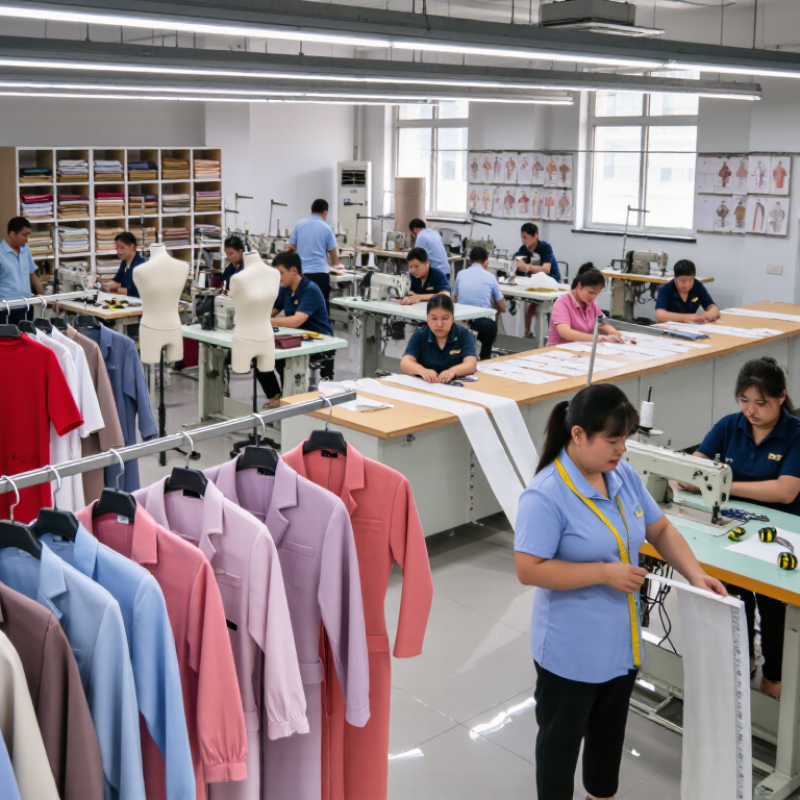
Plus-size apparel is not simply a standard pattern enlarged by a fixed amount. Bodies change in proportion, so a larger bust measurement does not automatically mean wider shoulders or a longer torso. A useful size chart lists bust, waist, hip, and garment length separately. Fit is physical. A sleeve can feel tight even when the chest measurement is correct.
Manufacturers in China may work from a buyer’s chart, a reference garment, or measurements developed for a specific market. The important step is agreeing on the measurement method before grading begins. Grade rules should explain how each point changes between sizes; the increments may differ for waist, hip, and shoulder. A chart can look precise and still miss the body. That matters.
Fit standards should be checked on more than one sample size, especially at the upper end of a range. Review armhole depth, front rise, waistband position, and how fabric behaves when seated or reaching. Stretch fabrics need particular care: recovery after wear can affect comfort and shape. Record sample measurements, fit notes, and agreed tolerances, then compare production pieces against them. A little uncertainty remains, because bodies vary, and one fitting model cannot represent everyone.
China’s textile and clothing exports reached US$293.6 billion in 2023, according to China Customs figures cited by the China Chamber of Commerce for Import and Export of Textiles. Textile exports accounted for about US$134.5 billion, while clothing exports reached roughly US$159.1 billion. The combined total declined about 8.1% from 2022. Still substantial. But it measures trade value, not plus-size production specifically.
For buyers assessing Chinese plus-size clothing manufacturers, this export scale suggests access to broad sourcing networks. These may include fabrics, knits, denim, linings, and garment finishing. A larger size range also needs careful grading: shoulder width, armholes, and rise should remain comfortable as sizes increase. Ask for measurement charts, sample garments, and fabric specifications. Details matter.
The World Trade Organization’s April 2024 Global Trade Outlook and Statistics reported that global merchandise trade volume fell 1.2% in 2023. That weaker trade climate adds context to China’s export total. It does not prove that every factory has strong capacity or consistent quality. That distinction matters. Export figures are a useful starting point, but buyers still need to verify samples, production timelines, and size-by-size fit.
| Indicator | 2023 Data | Relevance to Plus-Size Clothing Sourcing | What Buyers Should Verify |
|---|---|---|---|
| China textile and clothing exports | US$293.6 billion | Provides broad context on China’s textile and apparel export activity; it is not a measure of plus-size production alone. | Confirm each supplier’s product category, export markets, and relevant production experience. |
| Textile-product exports | US$134.5 billion | Represents textile products and materials, which may be relevant to fabric sourcing and supply-chain capacity. | Request fabric specifications, test reports, traceability information, and details of the supplier’s role in fabric sourcing. |
| Clothing exports | US$159.1 billion | Represents clothing exports across product types and sizes; it does not identify plus-size garment output. | Ask for product-specific samples, size-range experience, and references for comparable orders. |
| Plus-size size grading | Supplier-specific; no single national standard | Fit and grading methods vary by target market, garment type, and customer measurement chart. | Review the measurement chart, grading rules, fit samples, and approval process for each size range. |
| Production capacity and minimum order quantity | Supplier-specific; confirm directly | Capacity and minimum order quantities differ by factory, fabric, construction, and order complexity. | Request written capacity information, a production schedule, and a quotation for the intended styles and quantities. |
| Quality and compliance | Factory- and market-specific | Quality controls and legal requirements depend on the product and destination market. | Check current audit documents, product testing, labeling capability, and documented quality-control procedures. |
Note: Public trade statistics do not provide a reliable ranking of Chinese plus-size clothing manufacturers, and plus-size apparel is not reported as a separate export category in the figures above. The export values are broad industry context, not supplier-level or plus-size-specific data. Buyers should assess manufacturers using verified samples, documentation, and factory-specific quotations.
When comparing plus-size clothing manufacturers in China, look beyond the quoted minimum order quantity. Ask whether the MOQ applies per style, color, or fabric, and request a written breakdown. A low figure may cover only one color or a limited size range. Numbers can mislead. Confirm that the factory can source consistent fabric and produce your full size run.
Capacity should be checked against current orders, not just a monthly figure on a sales sheet. Ask for a sample production schedule, then compare it with the proposed delivery date. For plus-size garments, request graded patterns and fit samples across several sizes. Check bust, hip, and arm movement, along with seam strength and fabric recovery. A single sample size proves little.
Review certification documents directly, including expiry dates and the facility or process they cover. A certificate may not apply to every production site. Ask how fabric, stitching, measurements, and finished garments are inspected. Useful evidence includes measurement records, defect logs, and a final inspection report tied to your order. Request a pre-production sample and agree on tolerances before bulk cutting. Some checks add time and cost; skipping them can create larger problems, and even a detailed checklist cannot prevent every defect.
How to compare manufacturers: MOQ, capacity, certifications, and quality control
The chart shows illustrative planning points, not verified supplier averages: actual MOQs vary by garment, fabric, size range, and customization. When comparing factories, confirm monthly capacity for similar products, verify that any certifications are current and relevant to the facility and materials, and ask about in-line and final inspections. Agree on an AQL standard and inspection criteria before production.
China’s strongest plus-size suppliers are best compared by product range, not by a single factory-size claim. The World Trade Organization reported that China supplied about 31.7% of global clothing exports in 2022. That scale supports sourcing across knit tops, woven shirts, trousers, denim, dresses, and lightweight outerwear. For plus-size programs, ask whether one production team can handle several categories without changing fit standards. A supplier may offer many styles, yet lack consistent grading across them. But scale is not fit.
Production strength also means dependable sampling, fabric access, and repeatable size grading. Request measurement charts, fit samples, and wash-test results for the actual fabric, especially for stretch knits and denim. Examine armhole depth, rise, waistband recovery, and seam allowance on larger sizes; these details often affect comfort more than a wider body measurement alone. China’s export share signals a deep manufacturing base, but it does not prove that an individual factory can meet your order quantity or quality targets. That distinction is easy to miss. Ask for recent capacity figures, sample lead times, and references for comparable product types, then verify them against a small trial order.
Before placing a bulk order, ask the factory to make samples across the intended size range. Check garment measurements against the specification, especially shoulder width, bicep room, rise, and thigh circumference. For plus-size styles, a graded measurement chart matters as much as the base-size sample. Try garments on different body shapes, then wash them according to the care label. Note shrinkage, seam twisting, color transfer, and changes in stretch recovery. Small details matter.
AQL 2.5 is a sampling threshold used during inspection, not a promise that every unit is defect-free. Agree on the inspection method, sample size, defect categories, and pass-or-fail rules before production. Inspect cartons, labels, stitching, measurements, and fabric flaws against the approved sample. Ask for dated photos and a written report. A clean inspection can still miss an issue. It is easy to over-trust a report without checking what was actually measured.
Verify that compliance documents match the factory, production site, and product scope. Check dates and issuing details, and ask how restricted substances and workplace requirements are monitored. Keep the approved sample and written specifications for comparison. If one sleeve feels tight or a measurement drifts, pause and ask for a correction sample. That extra check can feel slow, but correcting fit after shipment is harder.